




In a previous post, I discussed the Flink Datastream API and included a demo project. Running the main class of the JAR file as is may work, but it’s better to run it in a Flink cluster instead. But what is a Flink cluster anyway, and where can you get one? Let’s find out!
Installing Flink
If you want to follow along, download the Flink executables from this link and add the bin folder to your PATH.
If you’re running this from a Windows environment, you’ll have to use a Unix-like command line like cygwin.
Flink cluster
A Flink cluster is a distributed system for processing large-scale data streams in real-time using Apache Flink. It has several parts that each have a vital role in making sure the stream processing is efficient, elastic and resilient to errors.
Job Manager
The Job Manager is the master node of a Flink cluster. It is responsible for coordinating the execution of Flink jobs, managing resources and overseeing task execution. It also handles checkpoints to monitor stream positions and save points to keep the state of a streaming job consistent.
You can start a Job Manager with the following command:
jobmanager.sh start
If the operation is successful, the web dashboard will be available at http://localhost:8081.
Task Manager
Task Managers are the worker nodes in a Flink cluster. They execute the task assigned by the Job Manager while managing the task’s memory and network buffers, communicating with other Task Managers for data shuffling and state sharing, and reporting task status and progress to the Job Manager.
For the demo project from my previous post, we will need at least two Task Managers, which we can start by executing the following command twice:
taskmanager.sh start
The Task Manager is supposed to receive a resource ID automatically, but this doesn’t (always) work on Windows. To fix this, you can configure the taskmanager.resource-id property in conf/flink-conf.yaml.
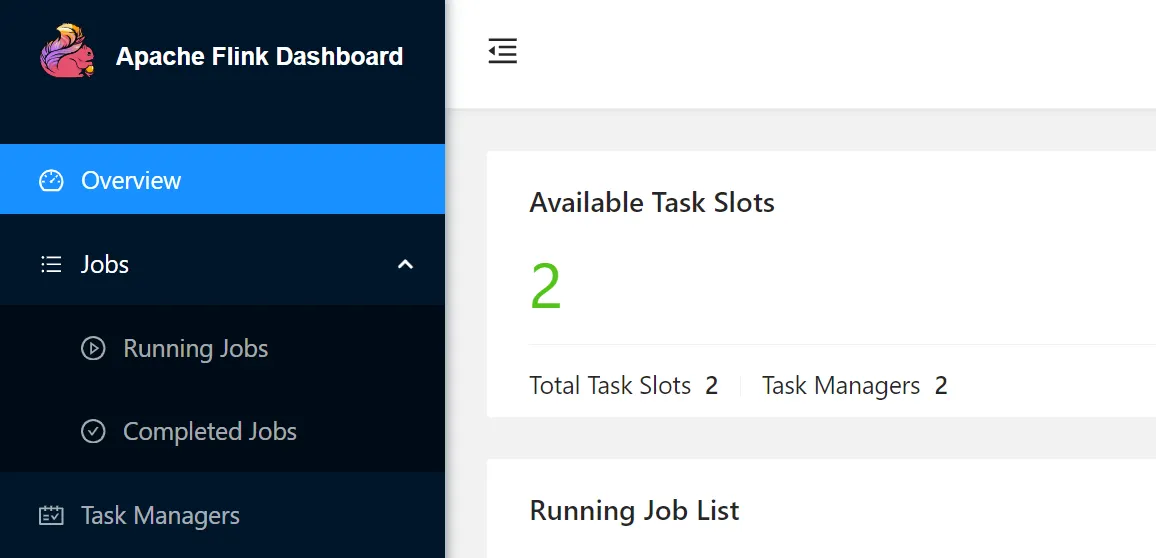
After the Task Managers have been initialized, they should be visible in the web UI. This means they are ready to accept jobs.
Kafka
We need a Kafka environment to connect our Flink Jobs to, and there are various options available to run a Kafka cluster locally.
I’m going to use the Conduktor one, which comes with a console and a Redpanda cluster: https://www.conduktor.io/get-started/.
Before proceeding, make sure that the following topics exists:
cms_personanalytics_personperson
Deploying Jobs
Build project First
clone the git repository containing the demo from this GitHub repo and build the project with the following command




